

Jackpot

Sometime in 2016, my brother wanted pizza, but we figured we would try a new spot. Coming from Long Island, we conquered every well-known establishment, but we knew there had to be a spot we hadn’t tried. He pulls out his phone and shows me a YouTube channel called One Bite Pizza Reviews, seeing if this critic knows of a place. I listened tentatively, but something felt off about him. He had the hallmarks of a working-class Joe, but he didn’t sound like an Italian American, though certainly from the North East. “One bite and everyone knows the rules” in an over-dramatic fashion. With his beady eyes and bulbous nose, I asked if this guy was a Jew. My brother laughed and said, “ Yes! It is Dave Portnoy, the creator of Barstool Sports! I’ve been following him for years! His site is really taking off!” I disavowed whatever my brother was pitching, as if Dave knows pizza (to be fair, he does) or Barstool is some kind of grassroots form of sports entertainment. Later on, after spending a few hours listening to “Bro” talk and reading up on Barstool, I gave him my opinion, which was more my intuition that the site and various offshoots are promoting gambling to college kids who can barely afford the pizza Dave is critiquing. Clearly offended for the love of the Barstool, he said: “Just because he wears a tiny hat doesn’t mean every Jew is trying to separate you from your money”. Little did he know, Peter Chernin, the owner of a private equity group, purchased a majority stake of Barstool in 2016, coinciding with Barstool’s “taking off”. Fast forward to 2020, with Penn Entertainment putting a stake in Barstool, Dave Portnoy doing a selfie with Donald Trump (Casino Lover) in the White House, and branding himself a “degenerate gambler,” the rest is pretty much barfly drama. The betting portion of Barstool rebranded as ESPN BET in 2023, and as of December 2025, Portnoy announced that Barstool signed a deal with Netflix. Not bad for a pizza critic.
Gambling can be best summarized as a process addiction and not an impulse control problem which we tend to believe. According to the World Health Organization, about 12% of men and 6% of women globally have suffered directly from gambling harm, whether themselves or through someone close to them. What people must realize is that gambling has nothing to do with winning money; it is about the experience of uncertainty. Gamblers need the adrenaline rush. They need dopamine. It is no secret that people feel most alive when they lose. Losing legitimizes the participation in the game; ironically, winning does not. Winning is anticlimactic. You win, you are supposed to go home. Anticipation of the outcome is more addictive than the outcome itself. It’s all about the process.
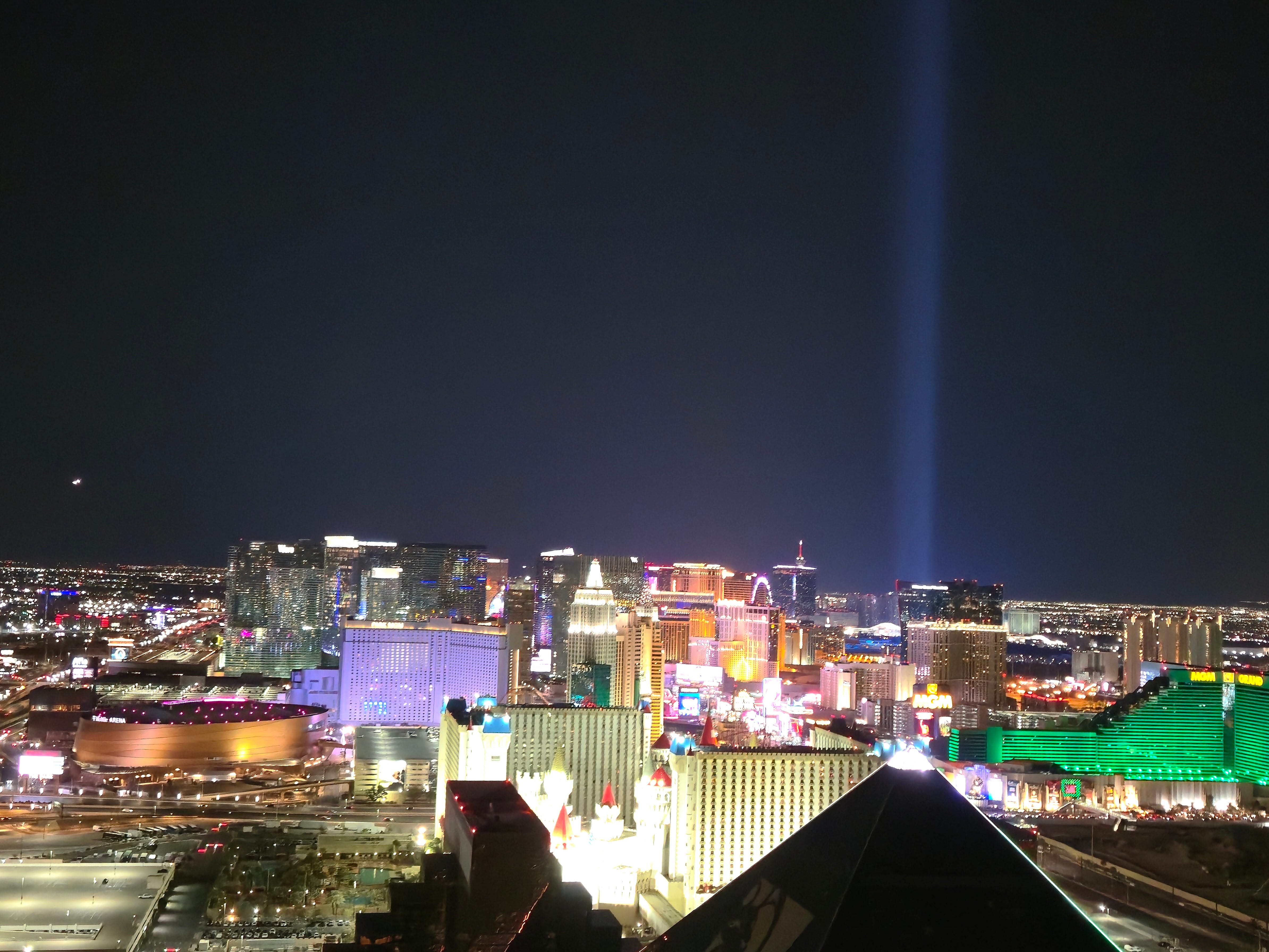
How many people know that 8 of the 10 largest hotels in the world by square footage and 12 out of the 20 by room count are in fact casinos and are all located within walking distance from one another on the Las Vegas strip? Remarkable isn’t in? They are all awe-inspiring, leaving one in disbelief at the grandeur of these complexes, each unique in character. The casinos are temples of testimony. Every single one of these monolithic structures were built upon vices. The Luxor, for example (the 10th-largest hotel in the world), was built at a cost of $375 million from petty cash (870 million, adjusted for inflation) earned through Circus Circus Enterprises. I have never been in a casino before, and I knew the only good game to play was blackjack. The one where players can actually influence the outcome. Dismayed, I found dealers pulling cards from a device called a shoe and not hand-shuffling as I had seen in the movies. How would I know this device isn’t rigged, or the dealer can manipulate it? Again, I don’t gamble or play lotto. I’m ignorant of it all and happily remain so. I always viewed gambling as a form of desperation. Dreams of big money fast. Strolling along, I noticed that L.V. Casinos have scaled back the number of tables and replaced them with computer-based machines, not the “legacy” mechanical types. Do these machines actually generate random numbers? Algorithmic designs pull players into a trance-like state called “machine zone,” where daily worries, social demands, and even bodily awareness fade away. I’m sure you have seen an elderly person wheeling around an oxygen tank to a craps table. Maybe there is a tracker linked through some kind of network that studies your betting habits every time you load your voucher, I thought. Though not legal in Nevada, funding a slot machine solely with a debit card is legal in other states. If X ,Facebook, and Google can build algorithms on your entire life, why wouldn’t one think that casinos (or online betting) have not been building algorithms on your play style? Dealers keep the lid shut on the inner workings of it all. Try asking a Mandalay Bay dealer what is in room 32135, and they will summon security. We are told time and time again that casinos are heavily regulated by the Gaming Control Board, yet it is impossible to regulate the estimated 60,000 slot machines in Las Vegas alone. The Las Vegas Gaming Commission will even enter a casino to test the oxygen levels, which has been said to be a myth. Higher oxygen levels will keep gamblers awake. With the rise of online gambling and sports betting, it has not translated to drain circling of brick-and-mortar casinos. Slot machines generated $37.12 Billion and $10.07 Billion for tables, with Casino admissions rising 5.3%. in 2025. All 38 commercial gaming states saw increases in annual commercial gaming revenue in 2025. Many cities are seeing an economic crunch, and revenue from gambling is obviously lucrative. Mets owner Steve Cohen, a billionaire hedge fund manager with a checkered history of securities fraud, is developing “Metropolitan Park.” An $8 billion, 78-acre casino and entertainment complex adjacent to Citi Field. If anyone knows a thing or two about the area’s demographics, they are well aware of the 80,000 Chinese residents living within walking distance of the casino. Flushing Queens is the equivalent to Mecca to the Han people would be a solid analogy. It is no secret that the Chinese have a strong penchant for gambling. It will be interesting to see if Metropolitan Park will be Vancouver Model 2.0. Metropolitan Park is projected to generate $33 billion in annual tax revenue over 30 years.
With the legalization of online sports betting and exploding in such a short time span, with total wagers increasing from $13 billion in 2019 to $135 billion in 2024, the government is slow to react. Monopolization by DraftKings and Duel collectively controls about 80% of the U.S. market. Sport betting via app has reoriented society, enabling easy money extraction, especially from the most vulnerable. This is without mentioning dark patterns and loot boxes in video games that mimic gambling, bridging the gap between the two. You no longer have to meet someone or visit an establishment to engage in the practice; you just reach into your pocket. A study found 20.8% of online sports bettors showed signs of disordered gambling, compared to only 11.3% of in-person sports bettors. More than half of men ages 18-49 (52%) now say they have an active sports betting account. At the time this article was written, FanDuel was facing seven state and class-action lawsuits, and DraftKings was facing six. Ranging from deceptive advertisements to illegal credit card based bets.
In the U.S., we have a quasi-libertarian view of money. Basically, if the harm isn’t physical, then it’s okay. “No one forced you to download the app, own it, take responsibility for your actions”. Easy to take such a John Wayne Bootstraptism view, but when you are 20 years old with feelings of despair and your favorite athlete is endorsed by DraftKings, coupled with sports media blending stats and history with betting, what outcome do you expect?
Like everything else in the West, we forgot why guardrails were put in place. Sport betting was outlawed not necessarily because it was a sin or because of the depravity it tends to entail, but to prevent games from being rigged. When the game is rigged or perceived as such, fans stop spectating. The key, though, is if you don’t look for it, you won’t notice. In the age of information, more fans have pointed out anomalies while watching. Football fans took to social media after the 2022 AFC Championship game between the Bengals and Chiefs, questioning if games are fixed. There was widespread feeling considering the media’s affinity for the Chiefs. Doesn’t anyone else find it funny when a sports commentator says, “Wow, they are really letting them play out there!”? NFL games are more heavily regulated, meaning the outcomes are more controlled. Why do we still have umpires? In college sports, athletes are more prone to assist in fixing games because their futures are on the line. In the NBA, there is the Tim Donaghy scandal. MLB will never be the same in my eyes after the Astros were caught stealing signs during their 2017 championship. NHL referee Tim Peel caught on a hot mic, wanting to call a penalty. Don King in boxing, I can go on, but you get the point.
An umpire or referee works for their employer; if their employer wants a certain outcome, it is a directive from their employer to do so. Sports journalists used to expose athletes, coaches, umpires, etc., who were fixing games, but when the journalists’ paypig is receiving large sums of money from companies that created such betting platforms, you can rest assured they will turn a blind eye. What about the safety of those actually directly controlling the game’s outcome? Will we see a basketball player shot and killed because a gambler put his life savings on a game, only to lose it all because a player missed a shot?
If you know sports, then why wouldn’t you take a chance? Loving sports is really determined by one’s degree of obsession. A fan may be an utter failure in other spheres of life, but he or she can still stake a claim to be a guru and enjoy the adulation and attention of their fount of sports trivia and narrative skills. In a sense, sports betters feel they have greater odds of winning based on their knowledge of the game. These betting apps are replete with the same prerequisites as OnlyFans or even Grubhub: to leverage humans’ basic drives, regardless of the downstream ramifications.
On April 15, 2011, marked a watershed moment for online gambling when the Department of Justice targeted the executives of the three largest poker sites in America — PokerStars, Full Tilt Poker, and Absolute Poker. These three had amassed 95% of the U.S. online gambling market share at the time. The day was known in the gambling world as Black Friday. These sites were accused of violating the Unlawful Internet Gambling Enforcement Act (UIGEA), engaging in money laundering, and fraud by circumventing U.S. regulations via offshore accounts. In 2006, the Bush administration passed the SAFE Port Act to strengthen security at U.S. ports. The act contained the UIGEA provision, which took a battering ram to most poker sites, leaving just the three that interpreted poker as a game of skill, not gambling when in fact they were in violation of the Wire Act. This prohibited gambling businesses from accepting payments transmitted by wire.
At the center of it all was fugitive Isai Scheinberg, a Canadian/Israeli national and PokerStars founder who was facing a 5-year prison sentence. As part of a plea deal, the charges of bank fraud and money laundering were dismissed on the grounds that those who were affected were made whole. Judge Kaplan, who presided over the case, said, “I don’t condone what you did, but the world is made of fallible people. It was a big mistake, but it should not ruin what remains of your life”. Scheinberg knew what he was doing was unlawful, received no jail, and a measly $30,000 fine. Too add insult, Kaplan said he would help get his passport back. Of the eleven originally indicted for their crimes, Scheinberg was the only one to walk away and was eventually inducted into the Poker Hall of Fame. As for the fate of PokerStar, it was eventually acquired by Flutter Entertainment, which happens to have a 77.4% stake in FanDuel.
Kalshi and Polymark let you buy events based on their outcomes. You either buy a YES or a NO based on whether you think the event will happen. Basically, financializing the 3rd grade “Oh yeah, wanna bet?” into a worldwide game. Funny how the laptop class redefines terms to their liking, by calling Kalshi and similar platforms “prediction markets” rather than gambling. Former New Jersey Gov. Chris Christie stated on X: “If it walks like a duck and quacks like a duck ... predictive market sites are offering sports gambling in violation of the laws of all 50 states. It’s as simple as that.” Keep in mind, this is the same person who rooted for the overturn of the Professional and Amateur Sports Protection Act in 2018, which prohibited gambling nationwide. What is not funny is betting on a Nuclear holocaust or a special forces soldier placing bets prior to an engagement. The insanity of it all is roughly 70% of Polymarket’s 1.7 million trading addresses recorded losses, while fewer than 0.04% accounted for over 70% of total profits, totaling $3.7 billion. Donald Trump Jr. joined Polymarket’s advisory board last year and is an adviser to Kalshi through his venture capital fund, 1789 Capital, which invested in Polymarket. Alex Nowrasteh, a proud libertarian, advocate for open borders, and a senior advisor of CATO institute, stated: “If there’s going to be graft and corruption in the government, at least it happens this way, where it produces a public good.” You don’t get a clearer definition of corruption. This is a new era where the chips are possible governmental decisions, and the house is cheering for volatility in a private casino. Trump has surrounded himself with the brokers to MGM and Flutter, much like Biden and his cohorts were bankrolled by Pfizer, Obama by Google, and the Bush administration by the military‑industrial complex.
With it all said and done, the powers that be have no intention of reindustrializing the United States, as they can work within the globalized framework to avoid the social costs of what they implement. Regulators tolerate “innovation” until it becomes too mainstream warranting systemic or political concern. More importantly, regulators focus on punishing the platforms, not the individuals who profited. The ruling class are actively engaging in a smash and grab operation at the expense of the proletariat. As more people who were once considered middle class feel the erroneous direction of their own lives and country, it is a safe bet (no pun intended) that they will see no harm in throwing caution to the wind and download a betting app or two. The history of gambling is a repeated pattern of discovery of ways to get around gambling laws, followed by rediscovering too late that gambling is bad, and finally, more gambling laws are passed.
I just wish all these people with more money than they know how to spend would chip in a little and pay off my mortgage.
This prompted me to look something up. The blackjack dealer's shoe holds 2, 4, 6, even 8 decks, and they split it with a shoe card for complete reshuffles. Not quite slot machines but pretty close. I'd just go play at the poker tables. But that's if I were good at cards, which I'm not, so I don't.
Eisenhower was a good poker player who had the odds memorized and good recall. In his autobiography, he told the story about one of the officers who was a terrible poker player, literally losing grocery money, and finally his colleagues decided to have a night where they let him win. As I recall the story, it took them all night to get this poor sap's money back to him. I think Eisenhower and several others just refused to play with him after that.
The pornography comparison is most apt because just like the anticipation is the thrill of gambling, the "hunt" is the thrill of pornography. It is natural for people to anticipate opportunities to make money and win, and it is natural for people to anticipate and seek sex. Both gambling and porn prey upon these instincts to make something that will hijack your natural drives to self-destructive ends.