

Human In The Loop

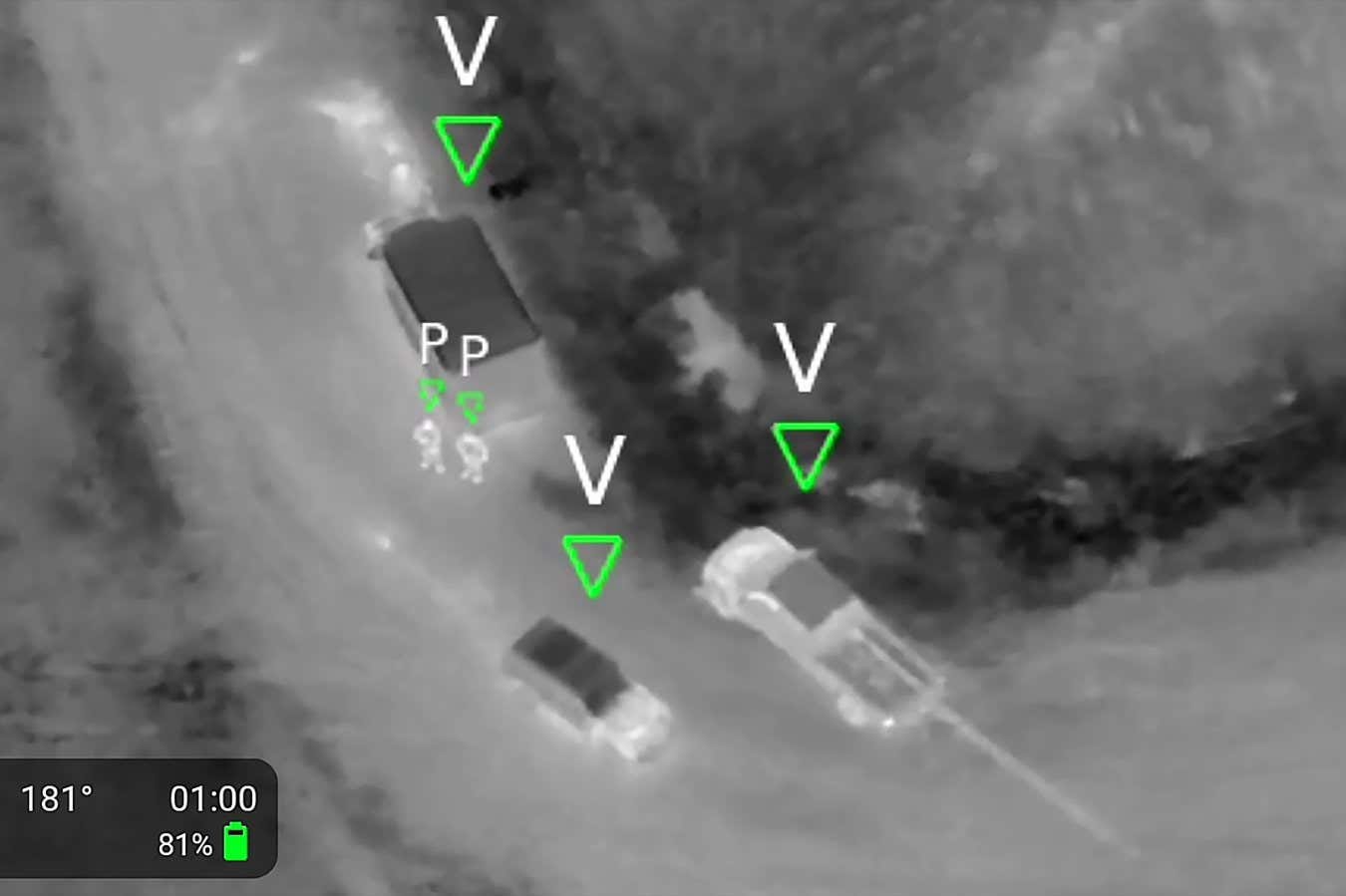
Legally speaking, humanity is important. A machine, as such, cannot be threatened – a man wandering through a car dealership with a shotgun, aiming and yelling “pew!” might be a trespasser, but won’t even sustain a disorderly conduct charge until at least one warm body shows up to take offense. Conversely, a machine threatening a human with a shotgun is a prima facie Problem – shut it down at a minimum, and hold the entity nominally in charge of it Responsible.
Like most of criminal law, the first people to figure out the implications of this were criminals.
In the big empty of I-70, between Denver and Topeka, nothing good demands the presence of a single human being. The robots do the sowing and the harvesting. When they break, depending, a part, a man, or a robot is dispatched at 150mph to fix them. They can go 150mph because, relative to traffic, they stand still – with enough inter-vehicle networking, you never crash in autonomous traffic, so the train proceeds steadily, 24/7, one truck in front of the same car for the duration. There is nothing besides the sowing and the harvesting and the traffic, because anyone sensible moves their factories together, especially when for the most part those factories also do not require workers.
Nevertheless, there are plenty of bad things in the big empty.
At some point everyone realized that calories are free – they come out of the ground, after all – and all famines are logistical in nature: a failure to move calories around. But then logistics also became free. Imagine letting a man starve on the side of a road, when 3000 calories fits on the same drone delivering a slightly tastier version to paying customers. The difference between an Oriental Chicken Salad in flight to a fire escape / landing pad and a protein bar to a Colorado wheatfield is imperceptible inside the system, merely a dispatch for one customer or another. But one of them accrues slightly more revenue, and one supports a marginal human life at subsistence. As long as you can do it at 3PM and not during peak demand, the quality-adjusted-life-years win, overwhelmingly. There are grants. There are nonprofits.
So if you wander away from Denver, into the big empty, you will note you are being stalked, and intermittently, the predator will feed you from the air. The caring professions are the primary remaining employment sector (prostitution and sales being the runners-up), so there is robust competition to deliver Programs and Services remotely, while the operators enjoy the amenities of modern life.
There is nothing for you in the city. There is too much attention, because too many people care. There are still cops, and people taking offense to call them, even if ultimately you are released to go about your day. There used to be drugs, but there are drugs in the big empty too, and no one to take offense.
And this is something new. You’ve heard this is a better place, more chill, and no one to complain about the drugs. You can, nominally, always head back. So you wander out, and look for the campfires.
They show you the sport.
At 150mph, a properly aerodynamic long-haul truck does not collide with obstructions so much as obstructions launch themselves away from it at impossible speeds, a twisted parody of intuitive Aristotelian physics. This is less than ideal for all parties involved, especially if the obstruction is a human body. Human life is, after all, sacred. So if someone appears to be about to enter traffic, what is the cost of a routable logistical snafu versus the incalculable price of one human life? There is no driver anymore, just equipment. Slam the brakes if you can, weave, launch into the ditch and the wheatfield beyond, or gracefully stop with regenerative brakes red-hot with current and emergency friction.
The traffic slows.
This is the sport of it – can you inch in, slow enough to be noticed and stopped, fast enough to not be avoided? Can you halt the truck without its cargo disintegrating into miscellaneous silicon shards and fragmented athleisure wear, and crack open the back like your great x400 grandfather busting open an antelope’s thigh bone?
This is generally accepted to be a cost of doing business. Leakage, repurchase and salvage is priced in. Particularly sensitive cargoes are routed around the major concentrations, exactly balancing the extra time and variance vs the probability of loss. Billions of tokens design the models, millions of data points train them. The Nike store will be stocked.
But some cargoes cannot wait.
It is alarmingly easy to fit $50 million in GPU hardware into a standard cargo container. One could do double that without too much trouble, but pad your eggs and spread your baskets. Waiting for them to arrive costs money – idling capacity, accruing interest, to say nothing of the opportunity cost of the foregone tokens. The entire economy runs on tokens.
Insurance demands a certain level of security in transit.
Security is not really a question of mass anymore. Armoring the cargo does nothing; physics dominates. It’s not a matter of surveillance; drone overwatch is trivial. The only question is to what extent one can do something about it.
Threatening a machine is barely a crime; the onus is on the machine to cringe and avoid it. A human is a different matter.
In the cab, there is a man. He is a passenger, facing backwards so as to absorb the g-force of a sudden stop, should one be necessary. This harness in fact allows the vehicle to brake over twice as hard as an old-timey racing harness, which is important. Given the sanctity of human life, he cannot simply be launched into the ditch and wheatfield beyond to avoid colliding with an obstruction.
He has a headset.
At the other end of the headset is a lawyer. At the other end of the lawyer’s headset is an agent. The man’s job is to be threatened. The lawyer’s job is to give him the best available legal advice, for which he is fully licensed. The best available legal advice comes from the agent, for research purposes only.
There is the sport, there is an obstruction, and a ballet occurs.
At 5 gees of braking, the truck halts in under two seconds to avoid hitting the hobo now menacing from the roadway. The man is shoved back into his chair and then suddenly released as velocity hits zero. The obvious lights and warnings occur. He shakes himself off and exits, per protocol, to “inspect the damage”, as traffic routes to the other lane.
His headset has begun recording and is already paired with the pistol he is licensed to carry for self defense (an inviolable right, recognized in 49 states). It perceives a hobo, armed with a crowbar, advancing within ten yards of the man. The loop begins: man – gun – headset – lawyer – agent and back again. They inform him – legally speaking, his life is being threatened. This will hold up in court. He is advised it is justifiable to defend himself.
The reticle of the pistol’s red dot superimposes between the man’s headset, the pistol itself, and the hobo. A chirp informs the man that in this instant, his lawyer has endorsed the analysis of the agent that the shot will stop a deadly threat to his life. He pulls the trigger, and the hobo crumples to the ground.
Mistaking the circumstances as a jittery interloper affronting their honorable right of sporting predation, and also pretty high to begin with, the hobo’s friends and acquaintances instinctively decide they, also, have the right to defend themselves – or at least this is the most plausible argument the survivors’ agents will advance for their public defenders evaluation. Six of them decide to make a move, with their assorted wrecking bars, sawzalls and angle grinders.
The man moves his pistol from one target to the next, waiting for the chirp. Still shaken from the crash, he only makes center mass on four of them and misses the fifth entirely, before the fifth and sixth realize this is an unanticipated complication and flee into the wheatfield. It would be more efficient, and certainly more deadly, to have a gimballed autocannon accomplishing the same thing, as is the practice in Ukraine. Plausibly, if lethality was not desirable, the machine could be programmed for the mythical “just shoot them in the leg” and loaded with rubber bullets or beanbag rounds. The system already knows where the arteries and organs to avoid are.
But a machine cannot defend itself, so instead there is the man, lightly coated with blood from the one hobo who made it within backsplash distance. The agent has advised his lawyer to advise him to request a medical evaluation and an HIV test when the police arrive. It has already been phoned in. It will be a 30 minute wait.
Five minutes before the police arrive, another truck, empty this time, arrives with another man, and a crane. The cargo container, legally uninvolved in the commotion, even if factually motivating it, is transferred, and they continue along their way.
The man’s afternoon is shot, so to speak. Depending on the local political valence of such incidents and the races of the parties involved, he may expect to be arrested, although the firm managing his lawyer expects less than a 1% chance he spends more than a night in jail. He is paid to undertake this inconvenience, as well as the bit with the pistol. Ambulances appear to transport the involved hobos.
On overwatch, a drone follows the ambulances to the county hospital, to ensure tracking of what are now remains – another nonprofit has the contract on burial services for the indigent and unhoused in the Big Empty. Human life is, after all, sacred.
Hank! When are you going to be back on the show?
There’s actually plenty of real economy beyond Caring, prostitution, sales… but it might involve sweat outside the sacred approved confines of the gym or prayer exercise mat. It may involve lubricants that aren’t water based and personal but petroleum and for machines, it might involve dirt that isn’t hydroponic gardening ….speaking of gardens touch some grass that isn’t THC based.